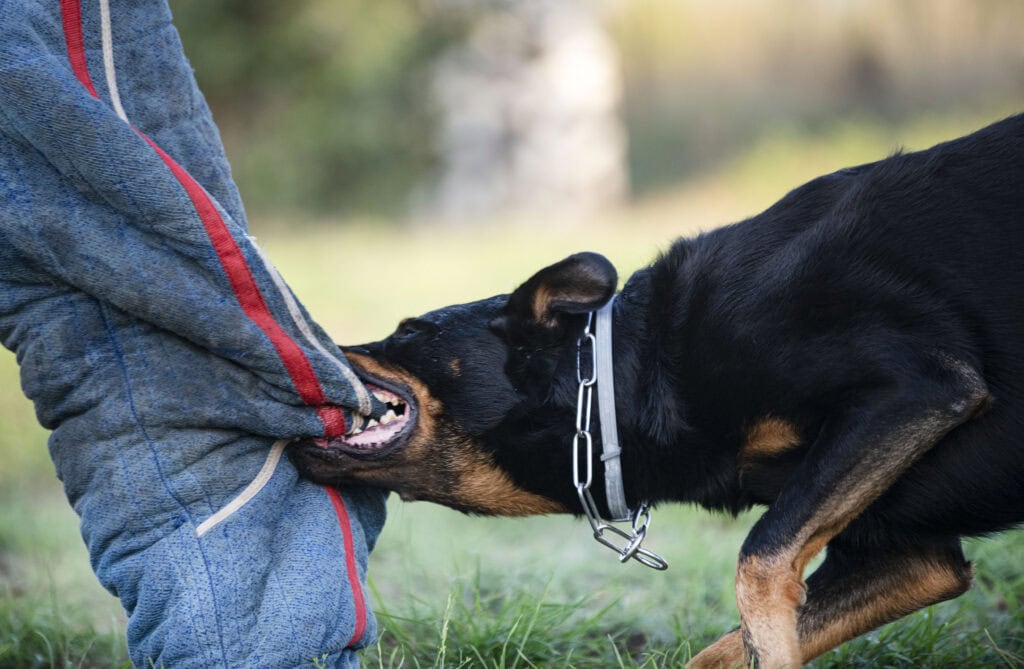
North Carolina’s legal framework governing liability for dog bite injuries is recognized as exceptionally challenging for plaintiffs seeking compensation. Unlike the majority of states, which follow a system of comparative fault, NC dog bite liability strictly adheres to the doctrine of contributory negligence. This single factor transforms what might appear to be a straightforward negligence claim—an animal attack—into a complex legal battle requiring meticulous evidence gathering and expert strategic advocacy. For victims attempting to recover damages, the need to navigate the burden of proof while simultaneously mitigating the defense of contributory negligence is paramount.
The state operates under a hybrid liability system, balancing the outdated foundational principles of common law negligence with modern statutory exceptions for dogs deemed dangerous. This juxtaposition of standards creates a confusing legal environment where the outcome hinges on whether the animal owner had prior knowledge of the dog’s vicious tendencies or whether the dog met specific legal classifications before the incident occurred. Because North Carolina mandates that a plaintiff succeed on one theory of negligence while simultaneously overcoming the absolute defense of contributory negligence, the standard practice for an attorney involves pleading both common law and statutory liability claims to preserve all avenues for recovery.
Explanation of the “one-bite” rule in NC
The common law doctrine that governs animal liability in North Carolina is frequently referred to as the “one-bite” rule. This terminology is a pervasive legal misnomer, as the rule does not actually grant a dog a single free, unpunishable bite. Instead, the focus is placed squarely on the concept of scienter, or owner knowledge.
To successfully assert liability under common law, the plaintiff must prove, by a preponderance of the evidence, that the owner knew or reasonably should have known that their dog possessed a vicious, dangerous, or mischievous tendency that could foreseeably lead to the injury suffered. If the dog has never exhibited prior aggression or warning signs, the owner is typically shielded from liability, absent proof of gross negligence in how the animal was handled immediately prior to the attack.
Proving Owner Knowledge: What Constitutes Scienter?
The burden of proof placed upon the plaintiff in common law dog bite cases extends far beyond the physical injury itself. Establishing liability requires securing evidence that demonstrates the owner’s state of mind and their awareness of the animal’s prior behavioral history.
The analysis of a common law dog bite injury in North Carolina places less importance on the severity of the bite wound and more importance on the preceding behavior of the animal and the owner’s response to that behavior. For this reason, evidence of dangerous propensity must be meticulously collected:
- Prior Aggression: This includes behaviors that fall short of a full attack, such as repeated snapping, excessive growling, or lunging at people or other animals, even if a bite did not result. These observations serve as concrete warnings to the owner.
- Owner Admissions and Warnings: Any verbal warnings given by the owner to guests, neighbors, or others regarding the dog’s temperament, or physical measures like the habitual use of a muzzle in public, can imply a known risk.
- Restraining Measures: The presence of excessive chaining, high fences, or prominent “Beware of Dog” signs often suggests the owner recognized the dog’s risk profile and took special precautions, thereby establishing awareness.
In the context of common law litigation, documentation of near-misses, observable containment failures, or verbal acknowledgments of the dog’s temper is often significantly more valuable than the post-incident medical bills alone in satisfying the crucial scienter requirement.
When strict liability applies (dangerous dogs)
North Carolina law provides a significant statutory carve-out to the often-restrictive common law rule. This carve-out imposes strict liability on an owner when a dog meets the definition of a “dangerous dog” or “potentially dangerous dog” as outlined in specific chapters of the North Carolina General Statutes, primarily NCGS § 67-4.1.
The crucial distinction here is procedural: under statutory strict liability, the plaintiff is generally relieved of the substantial burden of proving the owner’s prior knowledge (scienter). Instead, the plaintiff only needs to prove that the dog caused the injury and that the dog fits the specific, defined statutory criteria.

Defining and Registering the Dangerous Dog
A dog is classified as dangerous under state law if it has seriously injured or killed a person without provocation on property away from the owner’s premises, or if it has killed or inflicted serious injury upon a domestic animal while off the owner’s property.
Once local authorities officially designate a dog as dangerous, the owner must comply with stringent post-designation requirements. These often include securing specific liability insurance, housing the dog in a mandatory secure enclosure, and prominently displaying visible warning signs. Failure to comply with these post-designation legal mandates is frequently the most straightforward basis for a successful strict liability claim.
The Intersection of State and Local Regulations
A significant strategic advantage for plaintiffs arises even when a dog has not been officially designated as “Dangerous” by the county—a process that is often delayed or never initiated. Nearly all local jurisdictions within North Carolina maintain specific leash laws, restraint ordinances, or codes defining public nuisances that are often much stricter than the minimum requirements under state law.
A violation of a local ordinance, such as a dog running loose in contravention of a municipal leash law, is often treated as negligence per se (negligence established as a matter of law). The determination that negligence exists is automatically satisfied by proving the ordinance violation occurred, provided the violation was the proximate cause of the injury. This provides a highly effective path to establishing liability, independent of the complexities of the common law “one-bite” rule and the stringent requirements of the state’s formal “dangerous dog” designation.
The critical role of contributory negligence in dog bite cases
In North Carolina personal injury law, the doctrine of contributory negligence is the single most defining and formidable legal challenge. This strict rule dictates that if the injured victim (the plaintiff) is found to have contributed to their own injury, even in the slightest degree (i.e., if their fault is found to be 1% or more), they are absolutely and totally barred from recovering any damages whatsoever. This all-or-nothing standard stands in stark contrast to the comparative negligence systems used in most other U.S. states.
How Contributory Negligence is Applied in NC Dog Bite Liability Cases
Defense attorneys in dog bite cases universally and aggressively employ the defense of contributory negligence. Their primary goal is to prove that the victim failed to exercise reasonable care for their own safety when interacting with the dog or being near the premises. The defense attempts to persuade the judge or jury that the victim’s actions, however slight, were a proximate cause of the attack.
Examples of victim conduct often alleged by the defense to constitute contributory negligence include:
- Teasing, rough-housing, or attempting to pet a strange dog or a dog known to be agitated.
- Ignoring clear physical warnings, such as “Beware of Dog” signs or verbal warnings from the owner.
- Unauthorized entry onto the owner’s private property (trespassing).
- Approaching a dog that is demonstrably aggressive, injured, or engaged in guarding food, puppies, or territory.
Because North Carolina’s rule creates an all-or-nothing outcome, the rule drastically alters settlement negotiations. Defense counsel possesses immense leverage because they only need to convince one juror that the plaintiff was minimally at fault (even 1%) to win the entire case.
Mitigating the Contributory Negligence Defense
The plaintiff’s legal strategy must be built upon the preemptive neutralization of the contributory negligence defense. This involves providing extensive evidence that the plaintiff’s conduct, even if slightly careless, was not the proximate cause of the injury. Alternatively, a plaintiff might attempt to argue that the owner’s negligence was so willful, wanton, or egregious as to legally negate the defense—a high evidentiary bar to clear.
The comparison between North Carolina’s system and that of other states illustrates the gravity of this legal environment:
North Carolina Fault Standards vs. Comparative Fault
Defenses commonly used by dog owners (trespassing, provocation)
The defenses raised by dog owners following an attack are not typically independent legal concepts; rather, they are often tactical maneuvers designed specifically to establish a foundation for the absolute defense of contributory negligence.
The Trespassing Defense
The status of the victim is often a highly contested point in litigation. If the victim was classified as a trespasser (on the property without permission or legal right), the owner’s duty of care drops significantly. Generally, the owner is only required to refrain from willfully or wantonly injuring the trespasser and must warn them of any known hidden dangers.
The defense will aggressively seek to classify the victim as a trespasser, as opposed to an invitee (e.g., a delivery person) or a licensee (e.g., a social guest), both of whom are owed a significantly higher standard of protection. An invitee is protected by the highest duty of care, requiring the owner to inspect and discover potential dangers, including the aggressive nature of a dog.
The Provocation Defense
The provocation defense is a primary legal mechanism used to establish contributory negligence. Legal provocation involves any act or omission by the victim that reasonably causes the dog to attack.
While intentionally hitting or kicking a dog clearly constitutes provocation, defense attorneys frequently argue that less obvious actions may also apply. These can include startling a sleeping dog, invading its personal space while it is eating, or initiating aggressive or overly energetic play, particularly if the victim was, or should have been, aware of the dog’s sensitivities. The success of this defense relies entirely on proving that the plaintiff’s actions were the direct, proximate cause of the injury, thereby satisfying the requirements for barring the claim under contributory negligence.
Assumption of Risk
The defense of assumption of risk argues that the victim knowingly and voluntarily accepted the inherent danger presented by the animal. This defense is most frequently utilized when the victim is a professional handler, such as a veterinarian, groomer, or animal control officer, who, by virtue of their occupation, accepts certain unavoidable risks associated with dangerous animals.
The defense can also be asserted against non-professionals who had a pre-existing relationship with the dog, knew it was dangerous, and yet chose to interact with it anyway. This requires proving the victim had actual knowledge of the specific risk and made a conscious, voluntary choice to encounter it.
Recoverable damages (medical, lost wages)
Once the plaintiff has successfully established liability—which includes overcoming the initial hurdles of the one-bite rule or strict liability and, critically, defeating the absolute bar of contributory negligence—they are then entitled to pursue full compensation for all injuries and losses stemming from the attack.
Economic Damages: Quantifiable Losses
Economic damages cover all losses that can be precisely calculated, including:
- Medical Treatment: This encompasses immediate costs, such as emergency room visits, necessary courses of antibiotics, wound cleaning, and rabies protocols. Crucially, severe dog bite injuries often require extensive future costs related to plastic and reconstructive surgery. These procedures may need to be repeated multiple times, spanning many years, especially in children, and must be accounted for in the initial claim.
- Lost Wages and Diminished Earning Capacity: Compensation is due for all time missed from work during immediate recovery. If the injury results in permanent disfigurement, the loss of function (particularly in the hands or limbs), or psychological damage that impairs the ability to work, the plaintiff can recover compensation for diminished future earning potential. The law allows for compensation for the loss of future earning capacity if the injuries permanently impair the victim’s ability to work in their profession until retirement age.
- Property Damage: Costs associated with any personal property damaged during the incident, such as clothing, watches, or eyeglasses.
Non-Economic Damages: Subjective and Psychological Harm
Dog bite injuries frequently inflict severe, long-term non-economic damages, largely due to the visible, permanent scarring and the traumatic nature of the attack.
- Pain and Suffering: Compensation for the physical pain endured from the initial attack, subsequent surgeries, and the recovery process.
- Emotional Distress and Post-Traumatic Stress Disorder (PTSD): The psychological impact of a dog attack is often profound and long-lasting. Victims frequently develop cynophobia (intense fear of dogs), suffer from night terrors, anxiety, and depression. Establishing these damages requires extensive documentation from mental health specialists who can confirm the trauma is a direct result of the attack.
- Scarring and Disfigurement: In severe cases, compensation for permanent aesthetic impairment is often the largest component of non-economic damages. Injuries involving the face, hands, or other visible areas result in lifelong disfigurement, warranting substantial compensation for the physical and emotional effects of permanent aesthetic change.
Statute of Limitations Warning
It is imperative that potential claimants be aware of the strict procedural deadlines governing personal injury actions. North Carolina maintains a definitive three-year statute of limitations for personal injury claims (NCGS § 1-52 (16)). Failure to formally file a lawsuit within three years of the date of the injury will result in the claim being permanently barred from the courts, regardless of the severity of the injury or the clarity of the owner’s fault.
The legal landscape for dog bite victims in North Carolina presents a triple complexity that demands expert legal handling. First, plaintiffs must navigate the hybrid system to establish primary liability, either by meeting the stringent requirements of proving the owner’s prior knowledge under the common law “one-bite” rule, or by successfully leveraging the technical criteria for statutory strict liability (which may also include violations of local ordinances). Second, and most critically, the plaintiff must construct an entire case that meticulously preempts and ultimately defeats the absolute defense of contributory negligence. Given the extreme risk imposed by the state’s stringent fault rules—where a minor misstep by the victim can result in the complete forfeiture of all damages—immediate consultation with an experienced personal injury attorney is essential. If you or someone you love is involved in a dog bite case, contact us immediately to get help with your case!