Why is it Critical to Know When to Stop for a School Bus?
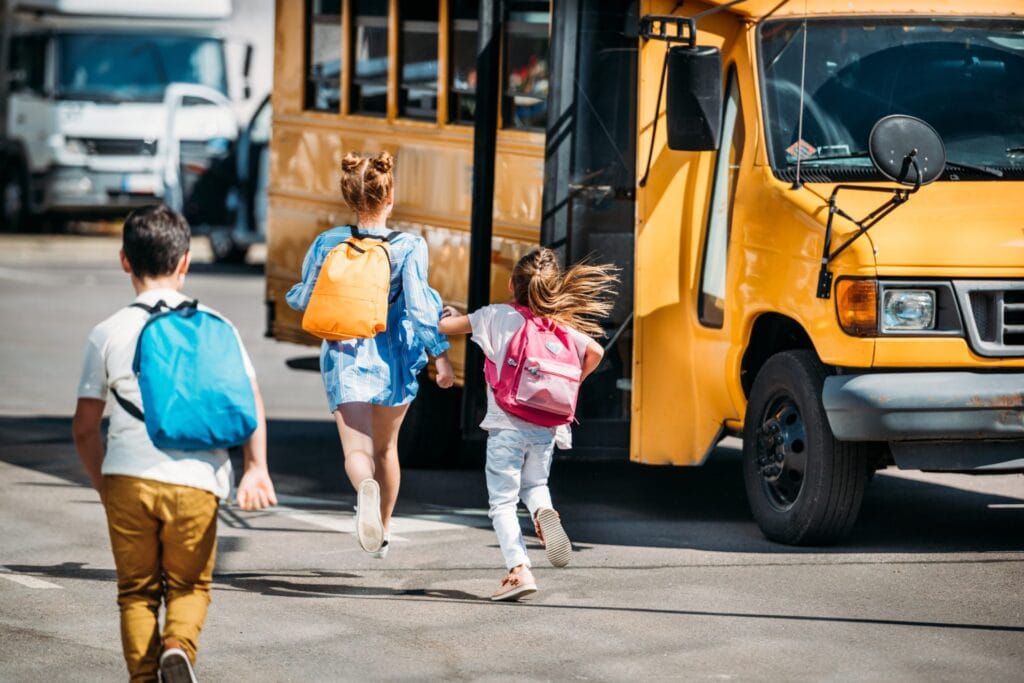
Do you know when to stop for school buses in North Carolina? For most of the year, school buses are a common sight on our roads. While all drivers are aware that these buses make frequent stops to pick up or drop off students, they may be uncertain about what actions they should take when a bus stops. Understanding the state’s laws about stopping for school buses not only protects drivers from serious legal consequences but safeguards the wellbeing of the child passengers.
What Do Red or Yellow Flashing Lights on a School Bus Signify?
School buses are equipped with features to make them highly visible to other motorists to increase safety. In addition to white flashing lights that can be used in foggy or low-visibility weather, all school buses have yellow and red flashing lights. The bus driver utilizes these bright lights to inform other motorists of the bus’s location and actions. The meaning of these lights is as follows:
When Do Drivers Need to Stop for a School Bus?
Knowing the appropriate times to stop for a North Carolina school bus helps ensure the safety of the students and other motorists. It is vital to stay aware any time you see a school bus on the road because it makes frequent stops, and you will likely need to brake and wait for students to enter or exit the bus. Impatience, inattention, or speeding can all lead to a dangerous school bus accident.
While no minimum stopping distance between a vehicle and a school bus is specified by North Carolina law, it is best to err on the side of caution and leave a reasonable distance between yourself and the bus.
In most cases, all traffic near the bus must come to a complete stop when the red lights are flashing and the stop arm is extended. However, depending on the configuration of the road you are traveling on, it may only be necessary for the vehicles directly behind the bus to stop. The North Carolina Department of Public Safety (NCDPS) has created a helpful visual aid that you can view here that shows drivers when they should be stopping for buses.
When Must Traffic From Both Directions Stop?
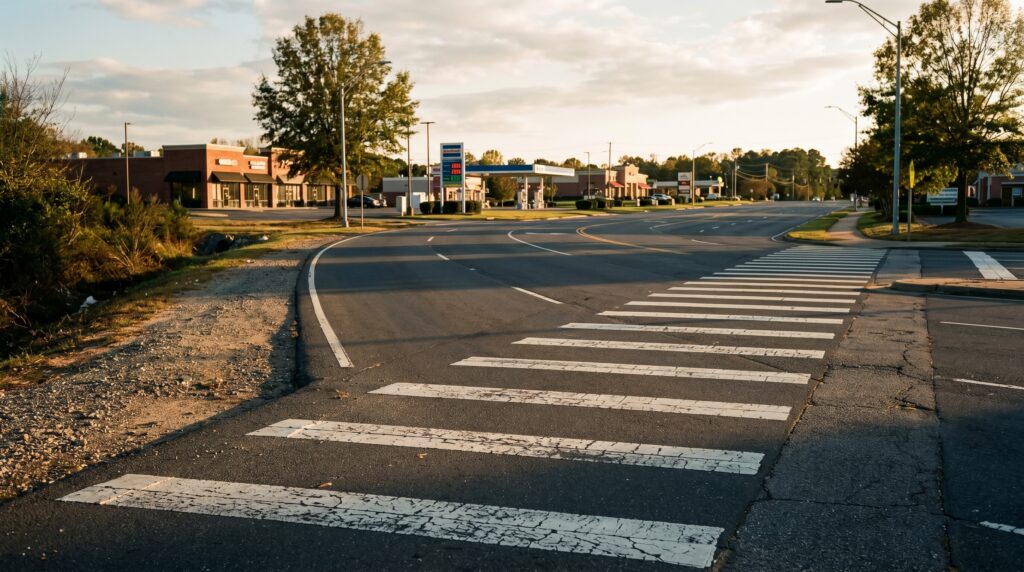
Motorists traveling in both directions are required to stop for a school bus in the majority of situations. This rule protects students whose bus stop or home is on the opposite side of the street from where they exit the bus. Drivers in all lanes of traffic must stop for a school bus on these types of roadways:
When Must Traffic From Both Directions Stop?
Due to the layout of certain roadways, students may only be able to safely reach the side of the road where they disembark the bus. In these cases, only the traffic traveling in the same direction as the bus must stop. Examples include:
What Are the Penalties For Failing to Stop For a North Carolina School Bus?
Because a failure to stop for a school bus can potentially lead to the injury or death of a child, the consequences of these actions are strict. If you illegally pass a stopped school bus, it is a Class 1 misdemeanor violation which can result in the following penalties:
Additionally, this violation is not eligible for a prayer for judgment continued (PJC). A PJC is a unique feature of North Carolina law that drivers can sometimes invoke to avoid the consequences of a minor traffic violation, such as points on their license or insurance. However, failing to stop for a school bus is such a serious act that it does not qualify for this exception.
Losing your license is also a possibility for repeated offenses. If a driver is convicted of two of these violations within three years, their driver’s license can be revoked for a year. Three misdemeanor convictions for this violation can result in a permanent driver’s license revocation.
What if the Violation Results in an Accident?
If you fail to stop for a school bus and strike a passenger, it is a Class I felony. You can be fined a minimum of $1,250 and have your license revoked for two years. If the struck passenger dies from their injuries, it becomes a Class H felony, the fine increases to at least $2,500, and your license will be revoked for three years. You could also be subject to a civil lawsuit from the victim or their family for your negligent behavior.
What Should You Do if Your Child Has Been Involved in a School Bus Accident?
Sadly, it only takes one individual failing to follow the law for a heartbreaking school bus accident to occur. If a negligent driver has injured your child, you deserve justice. Our compassionate and experienced bus accident lawyerscan explain your legal rights and options for recovering compensation from the liable parties. Contact Harman Law today to schedule a free case evaluation: 704-286-0947.