Huntersville and the Lake Norman corridor were built for cars, not pedestrians, and a Huntersville pedestrian accident lawyer sees the result of that every week. High-speed arterial roads cut through commercial districts where people walk every day, but the infrastructure to protect them often isn’t there. Consider this: 66 percent of fatal pedestrian crashes, and 75 percent of serious injury crashes involve pedestrians crossing outside of intersections, often because there’s no safe crossing available. If you or a loved one has been struck by a vehicle while walking in Huntersville, a pedestrian accident lawyer at Harman Law can help you pursue the compensation you deserve.
At Harman Law, we represent pedestrians injured across the Lake Norman area, including Huntersville, Cornelius, and Davidson. We understand the specific road design failures that contribute to these crashes, and we know how to hold negligent drivers and property owners accountable.
Beatties Ford Road: Huntersville’s Most Dangerous Corridor
Beatties Ford Road has been the site of multiple fatal and serious pedestrian crashes in Huntersville. In October 2025, a 45-year-old woman was struck and killed on Beatties Ford Road. That same month, another pedestrian was seriously injured at the intersection of Beatties Ford Road and McCoy Road. The road carries significant traffic volume through areas where pedestrians are present but protected crossing infrastructure is limited.
The pattern here is clear. Beatties Ford Road was designed to move vehicles quickly, not to accommodate the pedestrians who now live, work, and shop along its corridor. When a road’s design puts vehicle speed ahead of pedestrian safety, the people walking along it are the ones who pay the price.
NC-73, US-21, and Gilead Road: Speed Through Suburbia
NC-73, also known as Sam Furr Road, runs through one of Huntersville’s busiest commercial areas near Birkdale Village. Despite heavy pedestrian activity from shoppers and restaurant patrons, sections of the road still lack continuous sidewalks and safe crossing points. The town has approved a 5.1 million dollar pedestrian bridge over Sam Furr Road near Birkdale Village to address the safety gap, but until construction is done, pedestrians have to cross a high-speed corridor without adequate protection.
US-21, also known as Statesville Road, carries nearly 24,000 vehicles per day, and NCDOT projects a 35 percent traffic increase by 2040. A widening project is underway, but in the meantime, pedestrians face a road designed for throughput, not safety. On Gilead Road near the Interstate 77 interchange, a 63-year-old pedestrian was struck and killed in the early morning hours. It’s a tragic example of what happens when fast-moving traffic meets inadequate pedestrian infrastructure.
Why Suburban Road Design Fails Pedestrians
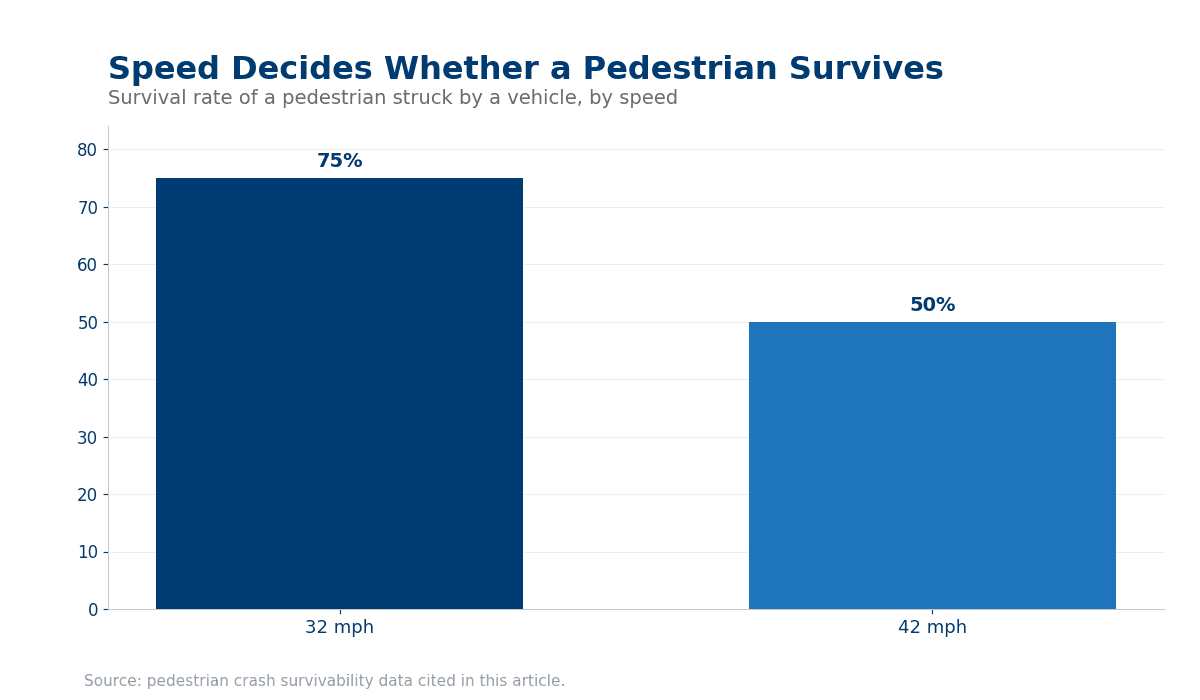
Huntersville’s rapid growth has outpaced its pedestrian infrastructure. Roads like NC-73 and US-21 function as high-speed commuter corridors, with speed limits that make pedestrian crossings extremely dangerous. At 32 miles per hour, a pedestrian struck by a vehicle has a 75 percent chance of survival. At 42 miles per hour, that survival rate drops to 50 percent. Many Huntersville roads have speed limits well above these thresholds, and the absence of sidewalks forces pedestrians to walk along road shoulders or cross mid-block because the nearest signalized intersection may be a quarter mile away.
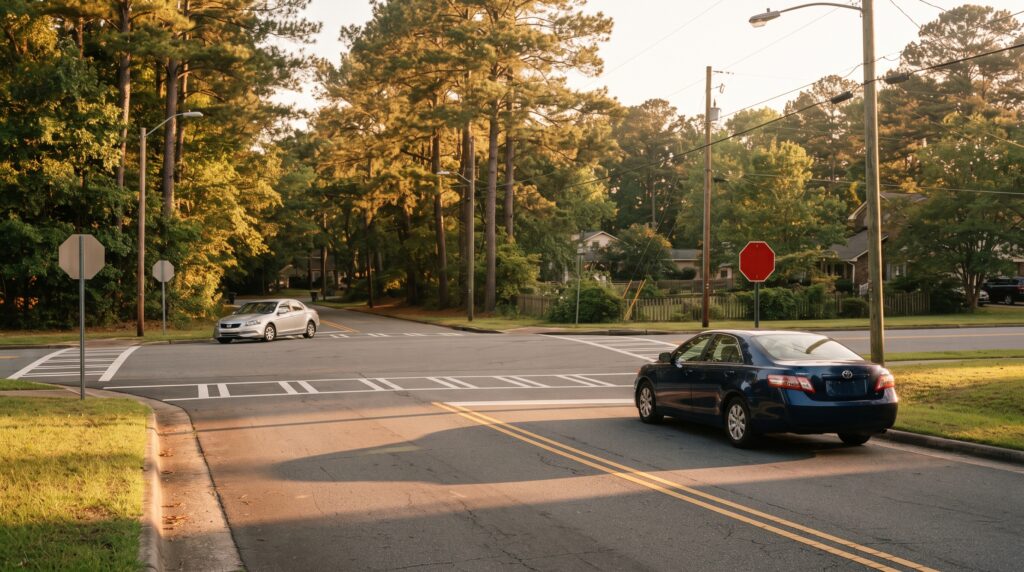
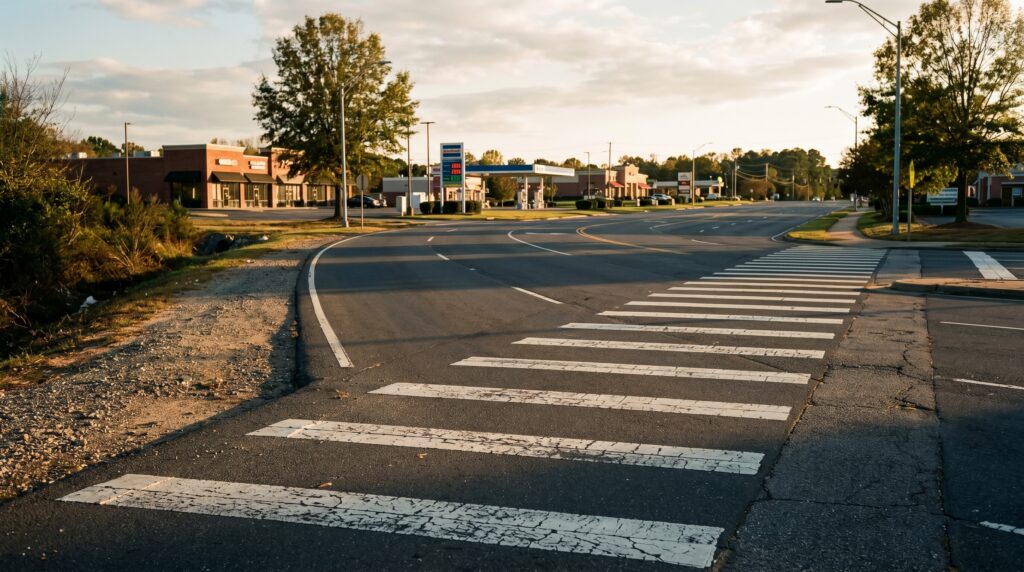
Commercial strip development makes the problem worse. Businesses line both sides of these arterial roads, generating pedestrian demand the road was never designed to handle. When someone parks at one shopping center and needs to reach a business across the street, they face a dangerous crossing with no marked crosswalk, no pedestrian signal, and no median refuge island.
Summer tourism at Lake Norman brings a significant increase in both vehicle and pedestrian activity. Visitors who don’t know the area’s road conditions create unpredictable traffic patterns, and the extra foot traffic near restaurants, boat launches, and recreational areas puts more pedestrians in harm’s way.
Summer tourism at Lake Norman brings a significant increase in both vehicle and pedestrian activity. Visitors unfamiliar with the area’s road conditions create unpredictable traffic patterns, and increased foot traffic near restaurants, boat launches, and recreational areas puts more pedestrians in harm’s way. The Street Access For Everyone Lake Norman organization was created specifically after a series of accidents involving local cyclists and pedestrians, including a cyclist fatality, highlighting the ongoing danger in this corridor.
North Carolina’s Contributory Negligence Rule and Pedestrian Claims
North Carolina’s pure contributory negligence rule creates a significant hurdle for pedestrian accident victims. Here’s why it matters: if the insurance company can argue that you were even one percent at fault, such as crossing outside a marked crosswalk, they’ll use that argument to deny your entire claim. That said, when there’s no crosswalk available within a reasonable distance, crossing mid-block may not count as negligence. An experienced pedestrian accident lawyer understands how to counter these arguments and show that the driver, not the pedestrian, was the negligent party.
Protect Your Claim After a Huntersville Pedestrian Accident
If you are struck by a vehicle, call 911 immediately. If you are able, photograph the location including the road conditions, the absence of crosswalks or sidewalks, and any visible injuries. Get the driver’s information and contact details from witnesses. Seek medical treatment the same day, even if your injuries seem minor. Contact Harman Law for a free consultation to discuss your legal options.