
Charlotte had 487 motorcycle crashes in 2024, a nine percent increase from the year before. 52 of those crashes were fatal. If you ride, those are the numbers a Charlotte motorcycle accident lawyer sees every week. Charlotte’s highway system was built for cars and commercial trucks, and that creates a uniquely hostile environment for riders. The numbers are getting worse, too. Fatal motorcycle accidents in Charlotte are now increasing at triple the rate of car accident fatalities. If you’ve been injured in a motorcycle crash on any Charlotte road, a Charlotte motorcycle accident lawyer at Harman Law can help you navigate the legal complexities that follow.
At Harman Law, we represent motorcyclists across the Charlotte metro area who’ve been struck by inattentive drivers, forced into dangerous lane changes, or injured by road conditions that should have been fixed. We understand North Carolina’s strict contributory negligence rule, and we know how it uniquely threatens motorcycle accident claims.
The I-77 and I-485 Interchange: Charlotte’s Deadliest Junction
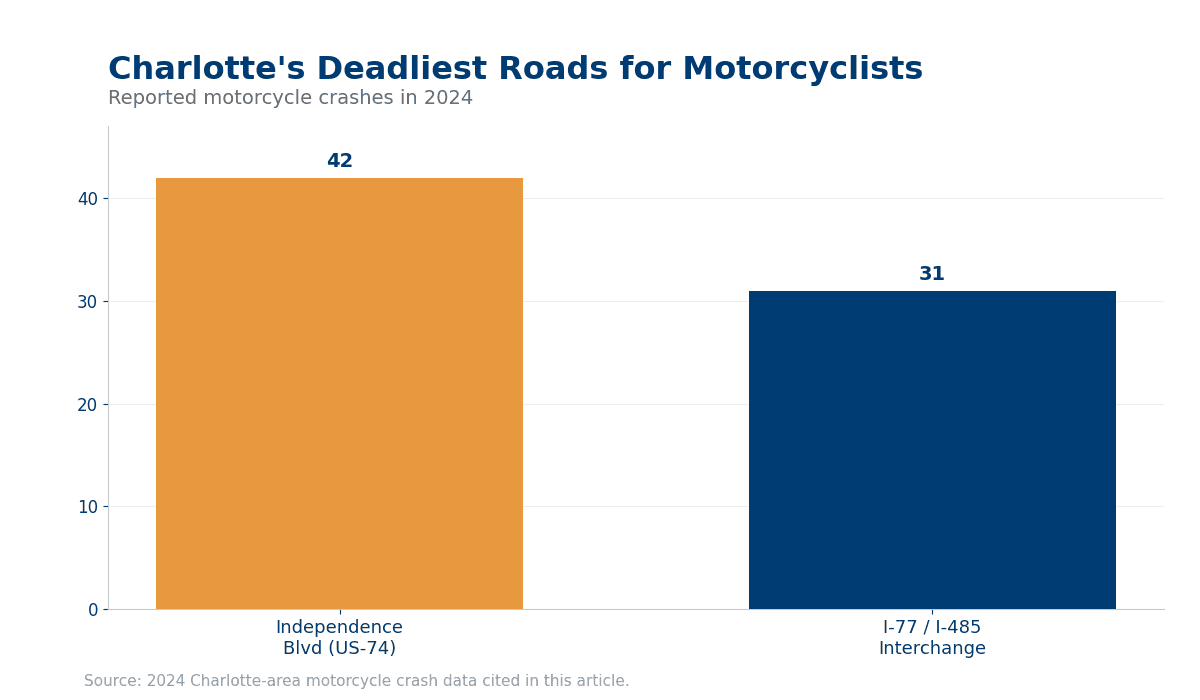
This interchange recorded 31 motorcycle accidents including 6 fatal crashes, which makes it the most dangerous interchange in the Charlotte metro area. For motorcyclists, the complex merging patterns and heavy commercial traffic create a gauntlet of lane changes, and a single driver who fails to check a blind spot can cause a catastrophe. The outer loop of I-485 near Benfield Road in north Charlotte has seen multiple motorcycle crashes, including a March 2025 incident involving two motorcycles that sent two riders to the hospital with serious injuries.
In January 2026, a fatal motorcycle crash happened on the I-485 Inner Loop near Mile Marker 27, and another fatal crash happened near Exit 26 at Robert Helms Road. These aren’t isolated events. They’re a pattern, and that pattern reflects the fundamental mismatch between how vulnerable a motorcycle is and the high-speed, high-volume traffic these interchanges were designed to handle.
Independence Boulevard: Charlotte’s Most Dangerous Corridor
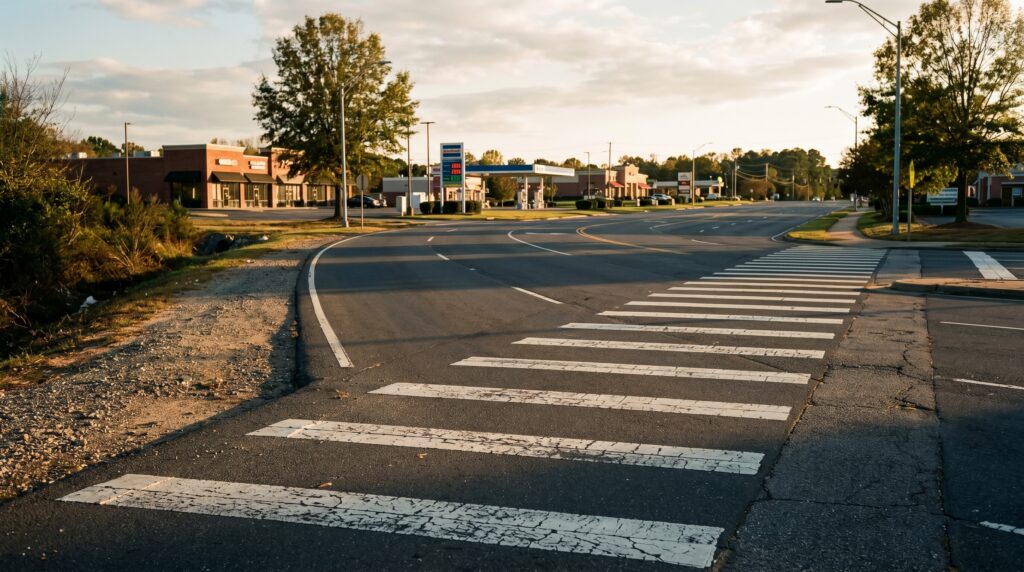
Independence Boulevard, also known as US Highway 74, recorded 42 crashes in 2024, which makes it the single most dangerous corridor in Charlotte for all vehicle types. For motorcyclists, the mix of highway speeds between 50 and 60 miles per hour and frequent commercial access points creates constant conflict zones. Drivers entering and exiting businesses along Independence Boulevard regularly fail to see approaching motorcycles. On top of that, the multiple ongoing construction projects along the corridor add debris, uneven surfaces, and narrowed lanes to the mix.
Why Left-Turn Collisions Kill Charlotte Riders
43% of fatal two-vehicle motorcycle crashes in the Charlotte area involve a car making a left turn directly into the path of an oncoming motorcycle. That makes it the single deadliest crash type for riders. It happens when a driver waiting to turn left misjudges the speed of an approaching motorcycle, or simply doesn’t see it. At intersections along North Tryon Street, South Boulevard, and the commercial corridors around Uptown, left-turn collisions account for a disproportionate share of motorcycle injuries and fatalities.
These crashes are almost never the rider’s fault. The driver had a duty to yield to oncoming traffic, and they failed. Even so, under North Carolina’s contributory negligence rule, the insurance company will aggressively look for any evidence that the rider contributed even slightly to the crash.
North Carolina’s Contributory Negligence Rule
North Carolina is one of only a handful of states that follows pure contributory negligence. Here’s why that matters: if you’re found even one percent at fault for the accident, you can be completely barred from recovering any compensation. For motorcyclists, insurance companies weaponize this rule by arguing that the rider was speeding, failed to wear reflective gear, or was riding in a blind spot.
That said, North Carolina law explicitly protects riders on the helmet issue. Under NC General Statute 20-140.4(b), failure to wear a helmet can’t be used to establish contributory negligence. This is a critical protection, but insurance adjusters will still try to use helmet status to argue increased injury severity. An experienced motorcycle accident lawyer knows how to counter these tactics and keep the focus where it belongs, on the driver who caused the crash.
Summer Is the Deadliest Season for Charlotte Riders
The peak months for motorcycle crashes in North Carolina are April through September, with May and September recording the highest crash totals statewide. In Charlotte specifically, summer brings a dangerous combination of increased ridership, tourist traffic, afternoon thunderstorms that leave oil-slick road conditions, and distracted driving during evening rush hours between 5 and 7 PM, when 34 percent of all motorcycle crashes occur. Friday evenings are especially lethal, since they combine commuter traffic with recreational riders heading out for the weekend.
What to Do After a Charlotte Motorcycle Crash
If you’re physically able, move to safety and call 911. Document the scene with photos of vehicle positions, road conditions, skid marks, and any visible injuries. Collect the driver’s insurance information and contact details from witnesses. Don’t admit fault or apologize at the scene.
Seek medical attention right away, even for injuries that seem minor. Conditions like internal bleeding, hairline fractures, and soft tissue damage often worsen over the following days. A same-day medical record that directly links your injuries to the crash is essential evidence in any claim. Contact Harman Law for a free consultation to discuss your case and understand your legal options.