
If your SSDI application was denied in North Carolina, you’re not alone, and you’re not out of options. The majority of initial applicants end up with their SSDI claim denied, but the appeals process gives you multiple chances to overturn that decision. Plenty of applicants who are ultimately approved for benefits were denied at first. The key is understanding the four stages of appeal, meeting every deadline, and presenting stronger evidence at each step. An SSDI attorney at Harman Law can guide you through the process and significantly improve your chances of approval.
At Harman Law, we represent North Carolina residents through every stage of the SSDI appeals process. We’ve seen firsthand how the right medical evidence, presented properly and at the right time, can turn a denial into an approval. If your claim has been denied, the worst thing you can do is give up or start over with a new application.
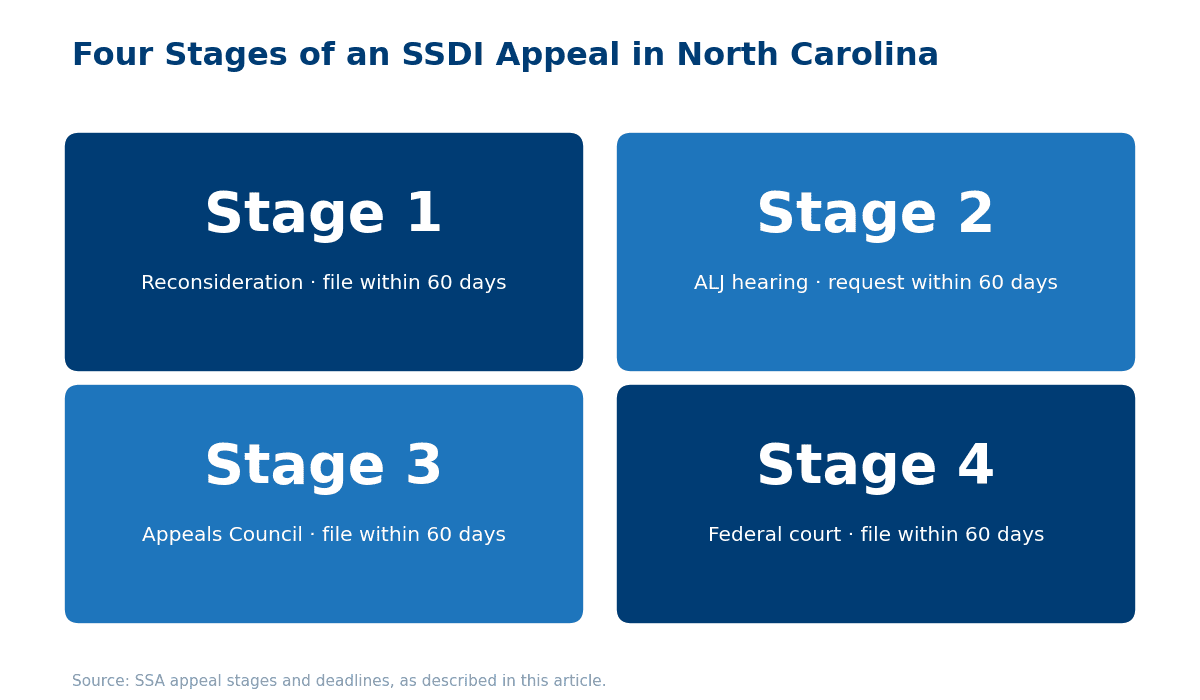
Stage 1: Reconsideration
The first step after a denial is requesting reconsideration. You have 60 days from the date you receive the denial notice to file this request. During reconsideration, a different examiner reviews your entire claim from scratch, including any new medical evidence you submit. This is your first chance to address the specific reasons your claim was denied and fill any gaps in your medical documentation.
The reconsideration stage typically takes two to four months. Approval rates at this stage are relatively low, but it’s a mandatory step you have to complete before you can request a hearing. Use this time to gather updated medical records, get a detailed opinion from your treating physician, and address every reason listed in the denial letter.
Stage 2: Hearing Before an Administrative Law Judge
If reconsideration is denied, you can request a hearing before an Administrative Law Judge. This is where the majority of successful appeals are decided. The ALJ hearing is your chance to present your case in person, testify about your daily limitations, and have your attorney cross-examine the vocational expert who will testify about whether jobs exist that you could theoretically perform.
Wait times for ALJ hearings in North Carolina can exceed 12 months, and the hearing itself is typically held at an Office of Hearings Operations. Preparation is critical here. Your attorney will help you organize your medical evidence, prepare your testimony, and anticipate the questions the ALJ and vocational expert will ask. The hearing isn’t adversarial like a trial, but it is structured, and how you present your limitations matters a great deal.
Stage 3: Appeals Council Review
If the ALJ denies your claim, you can request review by the Social Security Appeals Council. You have 60 days from the ALJ decision to file this request. The Appeals Council doesn’t hold a new hearing. Instead, it reviews the written record to decide whether the ALJ made a legal error, failed to consider relevant evidence, or reached a conclusion the evidence in the file doesn’t support.
The Appeals Council may grant your request and issue a new decision, send the case back to the ALJ for a new hearing, or deny your request for review. If the Appeals Council denies review, the ALJ’s decision becomes the final decision of the Social Security Administration.
Stage 4: Federal Court Review
If the Appeals Council denies your request, you have the right to file a civil action in federal district court. You have 60 days from the Appeals Council’s decision to file. Federal court review focuses on whether the SSA’s decision was supported by substantial evidence and whether the correct legal standards were applied. The court can affirm the denial, reverse it and award benefits, or send the case back for further proceedings.
Federal court review is a significant step, and it requires experienced legal representation. The court applies a different legal standard than the SSA, and the arguments that work at a hearing aren’t the same as the ones that work before a federal judge. Most SSDI cases are resolved before reaching this stage, but having an attorney who’s prepared to go to federal court strengthens your position at every earlier stage too.
Common Reasons for SSDI Denials in North Carolina
Understanding why your claim was denied is essential to a successful appeal. The most common reasons include insufficient medical evidence documenting the severity of your condition, failure to follow prescribed treatment without a valid reason, earning above the substantial gainful activity threshold, a determination that your condition is expected to improve within 12 months, and medical records that don’t support the level of limitation you’ve described.
Each of these denial reasons can be addressed with the right evidence and strategy. If your medical records are insufficient, your attorney can work with your treatment providers to obtain more detailed documentation. If the SSA determined you can perform other work, your attorney can challenge that determination with vocational evidence and testimony.
Do Not Start Over, Appeal Instead
One of the most common mistakes denied applicants make is filing a brand new application instead of appealing. Starting over resets the clock on your claim and loses the progress you’ve already made. In most cases, appealing the existing denial is faster and more effective than beginning again from scratch. Contact Harman Law for a free consultation within 60 days of your denial to preserve your appeal rights and talk through the strongest path forward.