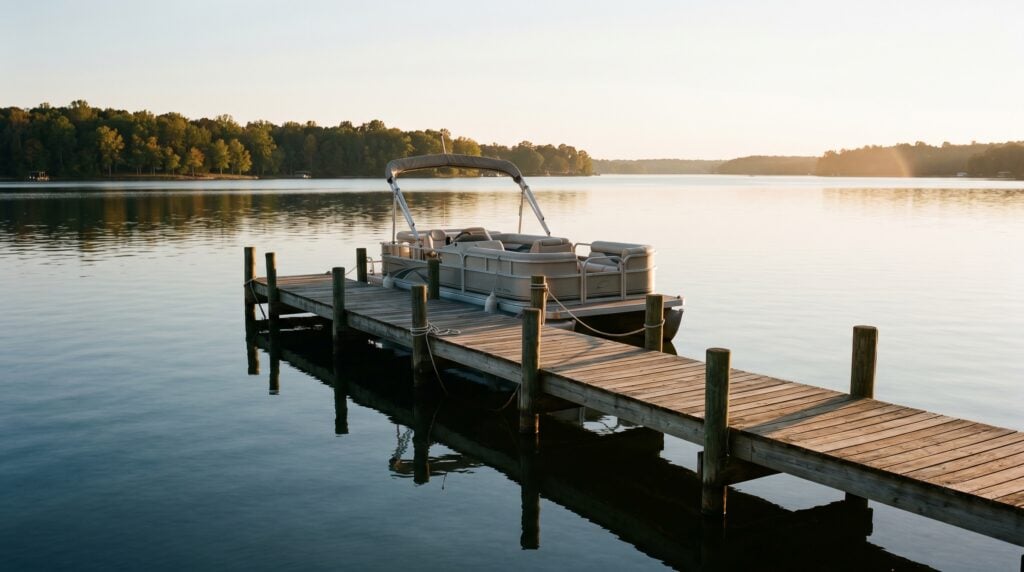
A Lake Norman boat accident lawyer is essential when a crash on North Carolina’s busiest lake leaves you with serious injuries. Here’s why: the combination of inexperienced operators, alcohol-related boating, and North Carolina’s pure contributory negligence rule makes these cases uniquely dangerous to handle alone. Lake Norman is the largest man-made lake in the state, with more than 32,000 acres of surface water, over 520 miles of shoreline, and thousands of boats on every peak summer weekend. The result is a recurring pattern of crashes that injure swimmers, passengers, and other boaters.
At Harman Law, our Huntersville law office sits minutes from the lake, and we represent boat accident victims across the entire Lake Norman corridor, including Mooresville, Cornelius, Davidson, Denver, and Sherrills Ford. We’ve handled cases involving pontoon collisions in narrow coves, wakeboard tower injuries, jet ski accidents at sandbar rafts, and fatal crashes on the open water. Understanding where Lake Norman crashes happen, why they happen, and what your rights are under North Carolina boating law can mean the difference between a denied insurance claim and a full recovery.
Lake Norman’s Most Dangerous Crash Hotspots
The narrow coves and tight channels at the north end of the lake produce a disproportionate share of crashes, while the open-water sections in the middle and south generate the most catastrophic injuries.
Reed Creek, Mountain Creek, and the NC-150 Bridge
These corridors get heavily congested on weekends, and they’re the site of repeated rear-end and crossing collisions, especially when wakeboard and ski boats throw heavy wakes in no-wake zones. Pontoon boats from the marinas on the east shore funnel through here on busy Saturdays, which compounds visibility problems and slows reaction times in the narrows.
Pelican’s Point Sandbar Near Marker 12
The sandbar draws a massive raft-up crowd every summer weekend. Jet ski injuries from operators leaving the sandbar at speed are a recurring claim type our firm sees, along with swimmer collisions involving boats moving through the raft. There’s no enforced perimeter around the sandbar, so swimmers are left exposed to incoming traffic. Night returns to the marinas after sunset add an alcohol-impaired-operator element to the same congested water.
The Open Water Near Stutts Creek and the Charlotte Yacht Club
Faster traffic, larger boats, and the false sense of security that open water creates all lead to higher-speed crashes with more catastrophic injuries. Wakeboard tower injuries, ejected passengers, and bow-on collisions in glare conditions are the most common claim types in this section.
Cowans Ford Dam at the South End
This section is subject to sudden wind shifts and submerged stumps from the original 1963 flooding that created the lake. Both contribute to grounding accidents and ejected passenger injuries, especially in shallow-draft pontoon and bass boats that aren’t familiar with the south basin.
Why Lake Norman Boat Crashes Happen
The North Carolina Wildlife Resources Commission reports that operator inattention and operator inexperience are the leading contributing factors in reportable boating accidents statewide. Lake Norman amplifies both. Three drivers stand out:
- **Operator inexperience.** The lake’s rental market and short-term vacation traffic mean a large share of operators on any given Saturday have never piloted a boat before that day. The legal minimum boating safety education requirement under N.C. Gen. Stat. § 75A-16.2 only applies to operators born on or after January 1, 1988.
- **Alcohol.** Under N.C. Gen. Stat. § 75A-10, operating a vessel under the influence is illegal at the same 0.08 blood alcohol concentration that applies to motor vehicles. Lake Norman’s marinas, lakeside restaurants, and raft-up culture mean a substantial share of operators are impaired by mid-afternoon on summer weekends.
- **Speed and distraction.** Failure to maintain a proper lookout, operating at unsafe speeds for conditions, and distracted operation round out the most common causes of crashes our firm investigates.
North Carolina Boating Law and Operator Duties
NC boating law puts duties on every vessel operator that parallel the duties of a motor vehicle driver. An operator has to maintain a proper lookout, operate at a reasonable speed for conditions, follow no-wake zones, yield to vessels with right of way, and avoid careless or reckless operation. Violations create the foundation for a negligence claim when a crash injures another boater, passenger, or swimmer.
Boat owners can also be liable for the negligent operation of someone else’s vessel under negligent entrustment. Handing the keys to an obviously intoxicated friend, an unlicensed teenager, or an inexperienced operator who can’t control the vessel puts the owner on the hook for resulting injuries. Charter and rental companies face additional duties under their commercial liability coverage and, in some cases, federal admiralty law.
North Carolina’s Contributory Negligence Rule on the Water
North Carolina is one of only a handful of states that still applies pure contributory negligence, and the rule applies on the water exactly the same way it applies on the road. If a defendant can show the injured party was even one percent at fault for the crash, the injured party recovers nothing.
That’s what makes Lake Norman cases uniquely dangerous without experienced counsel. Insurance carriers invest heavily in proving you weren’t wearing a life jacket, you stood up in a moving boat, or you’d been drinking yourself. Limited exceptions do exist, like last clear chance and gross negligence, but they’re fact-specific and require careful early evidence preservation.
What to Do After a Lake Norman Boat Accident
The first hours after a crash determine the quality of every claim that follows. Insurance investigators and defense attorneys start building their version of events as soon as the carrier learns of the incident, and they reach the lake fast. If you’re physically able:
- Get to shore safely and call 911.
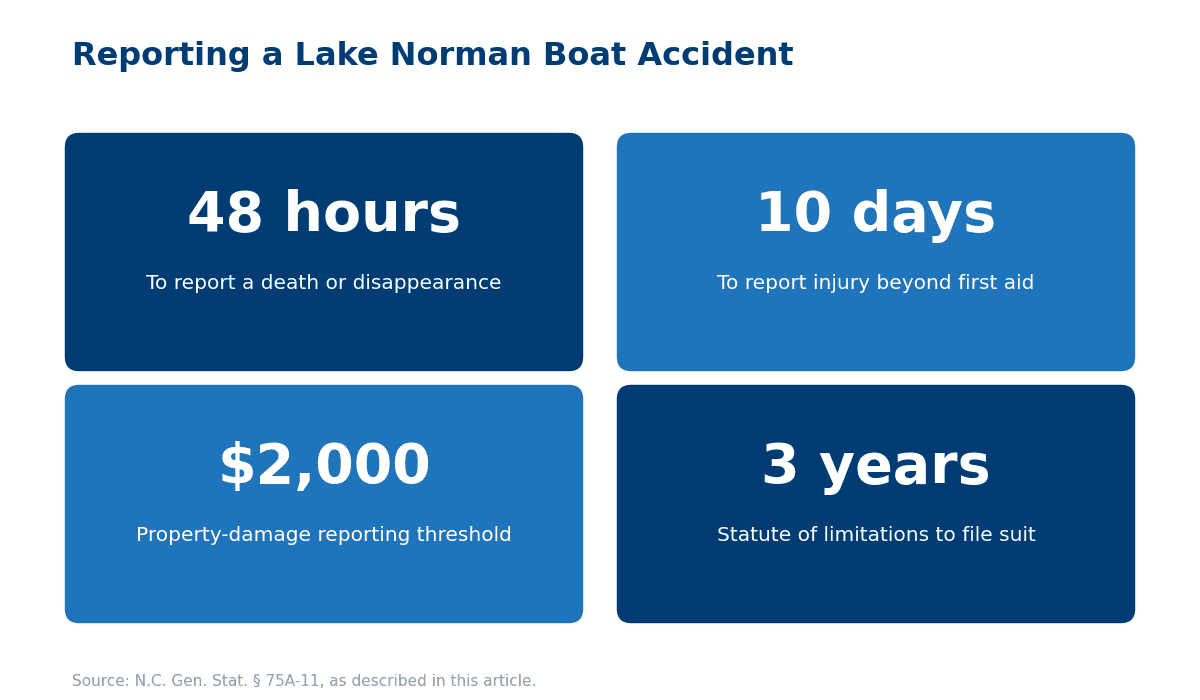
- Report the accident to the North Carolina Wildlife Resources Commission. This is required under N.C. Gen. Stat. § 75A-11 for any boating accident involving death, disappearance, injury requiring more than first aid, or property damage above $2,000.
- Photograph the vessels, injuries, water conditions, and any markers or shoreline features that put the crash in geographic context.
- Get contact information from every passenger, every witness on the water, and any operators of nearby boats.
- Seek medical attention even for injuries that seem minor. Spinal compression, internal bleeding, and concussions often don’t present symptoms in the first hours.
- Avoid giving recorded statements to any insurance company before speaking with a lawyer.
Contact a Lake Norman Boat Accident Lawyer
Boat accident claims on Lake Norman move faster than most clients expect. Insurance investigators reach the lake within 24 hours of a serious crash, vessels are repaired or stored, witnesses scatter, and water conditions change with the next storm. The NC personal injury statute of limitations is three years for most boating injury cases, but the evidence window is much shorter. Contact our Huntersville office to discuss your case before the carrier’s investigators control the narrative.