
Mental health conditions are among the most common reasons people apply for Social Security Disability Insurance in North Carolina, but they’re also among the most frequently denied. Depression, anxiety disorders, PTSD, bipolar disorder, and schizophrenia can all qualify for SSDI benefits. The catch is that the Social Security Administration requires specific medical evidence, and many applicants don’t provide it. Knowing what the SSA looks for before you apply can mean the difference between an approval and a denial that delays your benefits by months or even years.
At Harman Law, we help North Carolina residents navigate SSDI mental health claims from the initial application all the way through the appeals process. We understand the medical evidence standards the SSA applies, and we work with our clients and their treatment providers to build the strongest possible case.
Which Mental Health Conditions Qualify for SSDI
The SSA evaluates mental health claims under its Listing of Impairments, specifically Section 12.00 for Mental Disorders. Conditions that may qualify include depressive disorders, anxiety and obsessive-compulsive disorders, trauma and stressor-related disorders including PTSD, bipolar and related disorders, schizophrenia spectrum disorders, neurocognitive disorders, intellectual disorders, and autism spectrum disorder.
Having a diagnosis alone isn’t enough. The SSA requires evidence that your condition is severe enough to keep you from performing substantial gainful activity. In plain terms, you have to show that your mental health condition limits your ability to work at a level that would earn more than the current monthly threshold, which is adjusted every year.
The Two-Part Test: Paragraph B Criteria
For most mental health listings, the SSA uses the Paragraph B criteria to evaluate functional limitations in four areas: understanding, remembering, or applying information; interacting with others; concentrating, persisting, or maintaining pace; and adapting or managing oneself. To meet the listing, you have to show an extreme limitation in at least one of these areas, or a marked limitation in at least two.
A marked limitation means your functioning in that area is seriously limited, though not completely absent. An extreme limitation means you can’t function independently in that area at all. The SSA bases these determinations on medical evidence from your treatment providers, your own descriptions of daily functioning, and often a consultative examination by an SSA-appointed physician or psychologist.
Building the Medical Evidence Your Claim Needs
The single most important factor in an SSDI mental health claim is the quality and consistency of your medical records. The SSA wants to see a documented treatment history that shows how severe your condition has been over time. That includes psychiatrist or psychologist treatment notes, medication management records showing what’s been prescribed and how you’ve responded, therapy session records documenting symptoms, functional limitations, and treatment progress, and any hospitalizations or crisis interventions related to your condition.
One of the most common reasons mental health claims get denied is insufficient medical evidence. If you haven’t been receiving regular treatment, the SSA may conclude that your condition isn’t as severe as you say. If you can’t afford treatment, document your attempts to access care and any barriers you’ve run into. Free or low-cost mental health services are available through community health centers across North Carolina.
Residual Functional Capacity and Your Daily Life
Even if your condition doesn’t meet a specific listing, you may still qualify for SSDI through a residual functional capacity assessment. The RFC evaluates what you can still do despite your mental health limitations. The SSA looks at factors like your ability to keep a regular schedule, interact appropriately with coworkers and supervisors, handle workplace stress, and complete tasks with adequate pace and persistence.
Your own description of daily activities plays an important role in this assessment. Be honest and specific about your limitations. If you struggle to leave the house, have trouble concentrating for more than a few minutes, can’t handle routine changes, or experience panic attacks in social situations, document these limitations clearly. Exaggeration will undermine your credibility, but understating your limitations hurts your claim just as much.
The Role of Your Treating Physician’s Opinion
A detailed, supportive opinion from your treating psychiatrist or psychologist can carry real weight with the SSA. That opinion should address your specific diagnoses, the severity of your symptoms, how your condition limits your ability to work, and your prognosis. The most effective physician opinions point to specific clinical observations and test results rather than simply restating your self-reported symptoms.
If your treatment provider is willing to complete a Mental Residual Functional Capacity form detailing your specific limitations, that document can be one of the most persuasive pieces of evidence in your file. An SSDI attorney at Harman Law can coordinate with your treatment providers to make sure their documentation supports your claim effectively.
Do Not Wait to Get Help
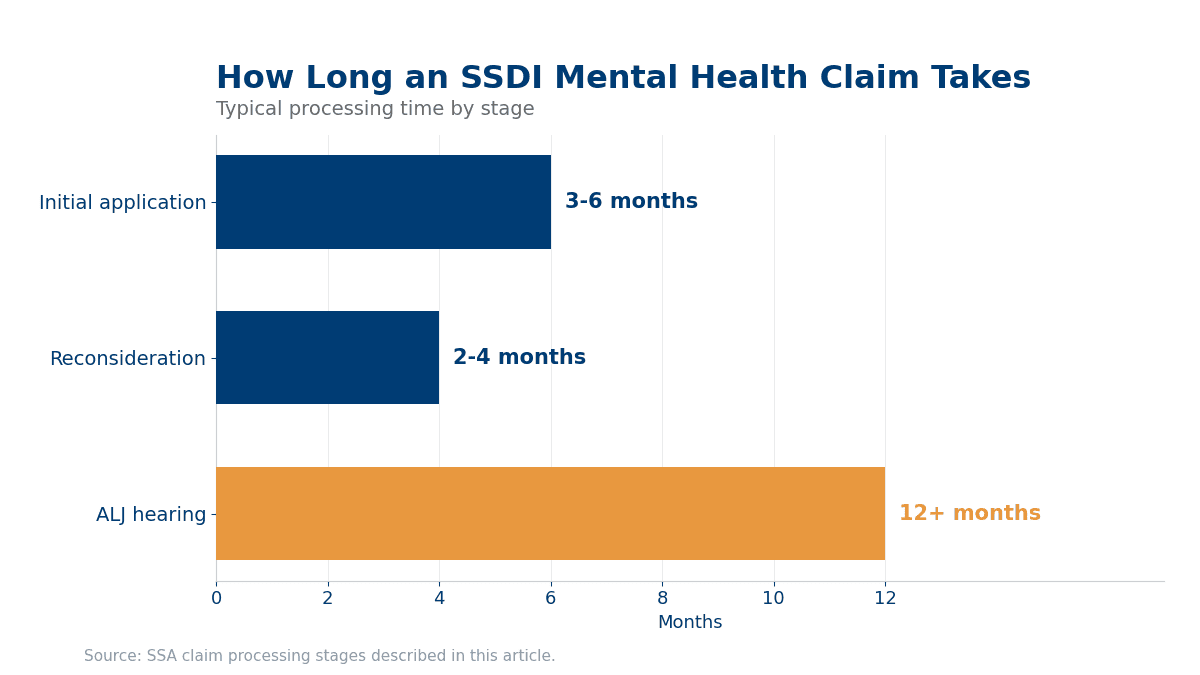
SSDI claims for mental health conditions often take longer to process than claims for physical disabilities, and the denial rate on initial applications is high. Starting the process with strong medical evidence and experienced legal guidance gives you the best chance of approval without the delays and frustration of multiple appeals. Contact Harman Law for a free consultation to discuss your SSDI claim and learn how we can help.